Showing posts with label Bible. Show all posts

Sunday, January 11, 2009

gnash

Pronunciation: \ˈnash\
Function: transitive verb
Etymology: alteration of Middle English gnasten
Date: 15th century
: to strike or grind (as the teeth) together
Source: http://www.merriam-webster.com/dictionary/gnash

Manger

A manger is a trough or box of carved stone or wood construction used to hold food for animals (as in a stable). Mangers are mostly used in livestock raising. They are also used to feed wild animals, e.g., in nature reserves. The word comes from the French manger (meaning "to eat"), from Latin manducare (meaning "to chew").

A manger is also a Christian symbol, associated with nativity scenes where Mary placed the baby Jesus in a manger. (Luke 2:7).
Source: http://en.wikipedia.org/wiki/Manger

Frankincense

Frankincense or olibanum (Arabic language: لبٌان, lubbān) is an aromatic resin obtained from trees of the genus Boswellia, particularly Boswellia sacra (syn. B. carteri, B. thurifera) (Burseraceae). It is used in incense as well as in perfumes.

Frankincense is tapped from the very scraggly but hardy Boswellia tree through scraping the bark and allowing the exuded resins to bleed out and harden. These hardened resins are called tears. There are numerous species and varieties of frankincense trees, each producing a slightly different type of resin. Differences in soil and climate create even more diversity in the resin, even within the same species.

These trees are also considered unusual for their ability to grow in environments so unforgiving that the trees sometimes seem to grow directly out of solid rock. The deep roots prevent the tree from being torn away from the stone during the violent storms that frequent this region; the tears from these hardy survivors are considered superior due to their more fragrant aroma. The aroma from these tears are more valuable for their presumed healing abilities and are also said to have superior qualities for religious ritual.

Tapping is done 2 to 3 times a year with the final taps producing the best tears due to their higher aromatic terpene, sesquiterpene and diterpene content. High quality resin can be visually discerned through its level of opacity. Omani frankincense is said to be the best in the world, although quality resin is also produced in Yemen, and along the north coast of Somalia.

Recent studies have indicated that frankincense tree populations are declining due to over-exploitation. Heavily tapped trees have been found to produce seeds that germinate at only 16% while seeds of trees that had not been tapped germinate at more than 80%.
Source: http://en.wikipedia.org/wiki/Frankincense

Myrrh

Myrrh is a reddish-brown resinous material, the dried sap of the tree Commiphora myrrha, native to Yemen, Somalia and the eastern parts of Ethiopia. The sap of a number of other Commiphora and Balsamodendron species are also known as myrrh, including that from C. erythraea (sometimes called East Indian myrrh), C. opobalsamum and Balsamodendron kua. Its name entered English via the Ancient Greek, μύρρα, which is probably of Semitic origin. Myrrh is also applied to the potherb Myrrhis odorata otherwise known as "Cicely" or "Sweet Cicely".

High quality myrrh can be identified through the darkness and clarity of the resin. However, the best method of judging the resin's quality is by feeling the stickiness of freshly broken fragments directly to determine the fragrant-oil content of the myrrh resin. The scent of raw myrrh resin and its essential oil is sharp, pleasant, somewhat bitter and can be roughly described as being "stereotypically resinous". When burned, it produces a smoke that is heavy, bitter and somewhat phenolic in scent, which may be tinged with a slight vanillic sweetness. Unlike most other resins, myrrh expands and "blooms" when burned instead of melting or liquefying.

The scent can also be used in mixtures of incense, to provide an earthy element to the overall smell, and as an additive to wine, a practice alluded to by ancient authorities such as Fabius Dorsennus. It is also used in various perfumes, toothpastes, lotions, and other modern toiletries.

Myrrh was used as an embalming ointment and was used, up until about the 15th century, as a penitential incense in funerals and cremations. The "holy oil" traditionally used by the Eastern Orthodox Church for performing the sacraments of chrismation and unction is traditionally scented with myrrh, and receiving either of these sacraments is commonly referred to as "receiving the Myrrh".
Source: http://en.wikipedia.org/wiki/Myrrh

Sunday, December 28, 2008

From sea to shining sea

Meaning
From one coast to another.

Origin
Taken from a line in 'America the Beautiful', the patriotic song written by Katharine Lee Bates in 1893. She wrote other versions later, in 1904 and 1913.
O beautiful for spacious skies,
For amber waves of grain,
For purple mountain majesties
Above the fruited plain!
America! America!
God shed his grace on thee
And crown thy good with brotherhood
From sea to shining sea!

She wrote the song following an inspirational visit to Pikes Peak, Colorado, USA, which she later described thus:
"One day some of the other teachers and I decided to go on a trip to 14,000-foot Pikes Peak. We hired a prairie wagon. Near the top we had to leave the wagon and go the rest of the way on mules. I was very tired. But when I saw the view, I felt great joy. All the wonder of America seemed displayed there, with the sea-like expanse."

The phrase is also frequently associated with Canada. The Canadian national motto - "A mari usque ad mare", translates as "From sea to sea". This has biblical origin:
"He shall have dominion from sea to sea and from the river unto the ends of the earth." (Psalm 72:8)

Source: http://www.phrases.org.uk/meanings/from%20sea%20to%20shining%20sea.html

Through a glass, darkly

1 Corinthians 13:12 contains the phrase

βλεπομεν γαρ αρτι δι εσοπτρου εν αινιγματι
which is rendered in the KJV as

"For now we see through a glass, darkly."
which refers to mirrors, not lenses. It has inspired the titles of many works.
Source: http://en.wikipedia.org/wiki/1_Corinthians_13
Sunday, April 06, 2008

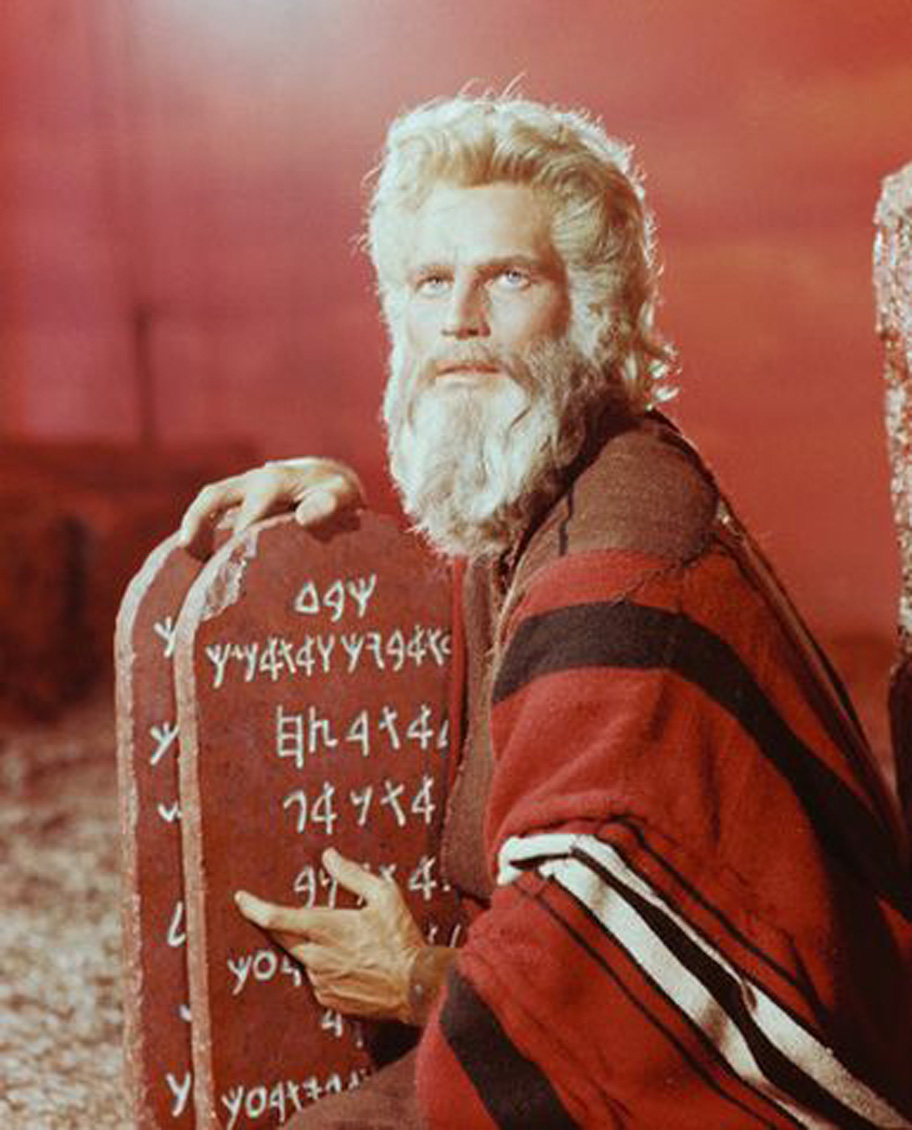
Moses is dead!


Old news perhaps, but not so. Charlton Heston, who portrayed Moses to such distinction in The Ten Commandments and made the words "Let my people go!" reverberate in history, has died at age 84.

Wednesday, November 28, 2007

10 Commandments: The Musical


Flixster plot: The story of Moses from the Bible in musical form, filmed live at the Hollywood Kodak Theater.

My take: Val Kilmer can't sing.

Thursday, May 24, 2007

I will laugh!

Went to Maggie's place so we could pray together for my healing. Jasmine was there too, of course.

What followed was an amazing time of fellowship, sharing and learning, full of the richness of God's word and truths. Not to mention a great dinner!

I realise now that there are so many things about God that we don't understand and that we've only scratched the surface. Through my daily devotion and prayer, I hope to know God in a deeper way and for Him to reveal His word for me through his Word.

I also shared quite a bit about my life for the first time, my frustrations and setbacks, my victories and God's deliverance. It felt really good to open up.

Towards the end, after we had finished praying, Maggie said she had a word from God about me. She said simply that I would laugh. I had to check myself. "I will what?" I asked, not believing what I had heard.

"In days to come, you will laugh. Laugh at your enemy, at your eczema," among other things, she explained. Unfortunately, "in days to come" is an indefinite adverbial of time. It doesn't literally mean days; instead it means "at some time in the future". And so I don't know when my healing will come, but I know it will come sooner or later. Pastor Koo had corroborated this yesterday. Maggie did warn that God gives us a word sometimes to prepare for spiritual attack. But God's grace is sufficient for me.

As I've shared recently, I am now at peace, because I am comfortable in my own skin. Pardon the pun. But what I mean is that I know that whatever happens, God is in control. Good or bad, He's in control. And I know He will come through for me, as He has promised.

As God (not luck) would have it, Joshua and Benjamin called me up and said they wanted to meet. So they cycled over and though we did not spend long and I spent most of the time scratching from sweat and mosquitoes, I stayed long enough to encourage them both and give my testimony. I'm sure it spoke to them, else God would not have arranged it as such.

As I type this, I am preparing to go to my practicum school (Rosyth School). And I feel a little less nervous knowing my God is going with me. I believe He will let me excel there, eczema notwithstanding.

I wait eagerly to laugh loudest, longest, and last. Muhahaha! =]

PS: Manfred has his own drum set!

Wednesday, May 16, 2007

Why do we pray?

Had difficulty answering this in ALG today. Why do we need to pray when God already knows what we want?

We came up with answers like: God wants us to experience asking and waiting; so we learn to acknowledge God as provider; to build our faith.

Then when I came home, my mum shared this verse with me: 1 Thessalonians 5:17 - Never stop praying.

Just three words? Yep.

According to the Life Application Study Bible, a Christian's persistence is an expression of faith that God answers prayer. When you feel tired of praying, know that God is present, always listening, always answering - in ways that He knows are best.

We also talked about good practices in prayer, like praying aloud, and agreeing with others' prayers. Also, prayer is just like talking to Your Heavenly Father. Don't worry about getting words wrong or not knowing what to say. God looks at our heart.